← ALL FRESH TAKES
SOURCE-LED EDITORIAL REVIEW
SOURCE-LED EDITORIAL REVIEW
THEMATIC CENTER
survivalNARRATIVE PRESSURE
the journeyFORM
animationRECORD ANCHORS
person · tourist · drivingThe record for Alternative yields three coordinates specific to its premise—person, tourist, and driving. That vocabulary places survival at the center and gives the journey its dominant tension. It establishes a documentary baseline, not a borrowed score; criticism must still ask what the form does with that material.
Alternative brings survival into contact with the journey through animation. That intersection is our Fresh Take: judge the premise less by its familiarity than by how precisely that combination makes its conflict legible. The existing editorial note adds this view: A strong, singular piece of cinema driven by genuine directorial conviction.
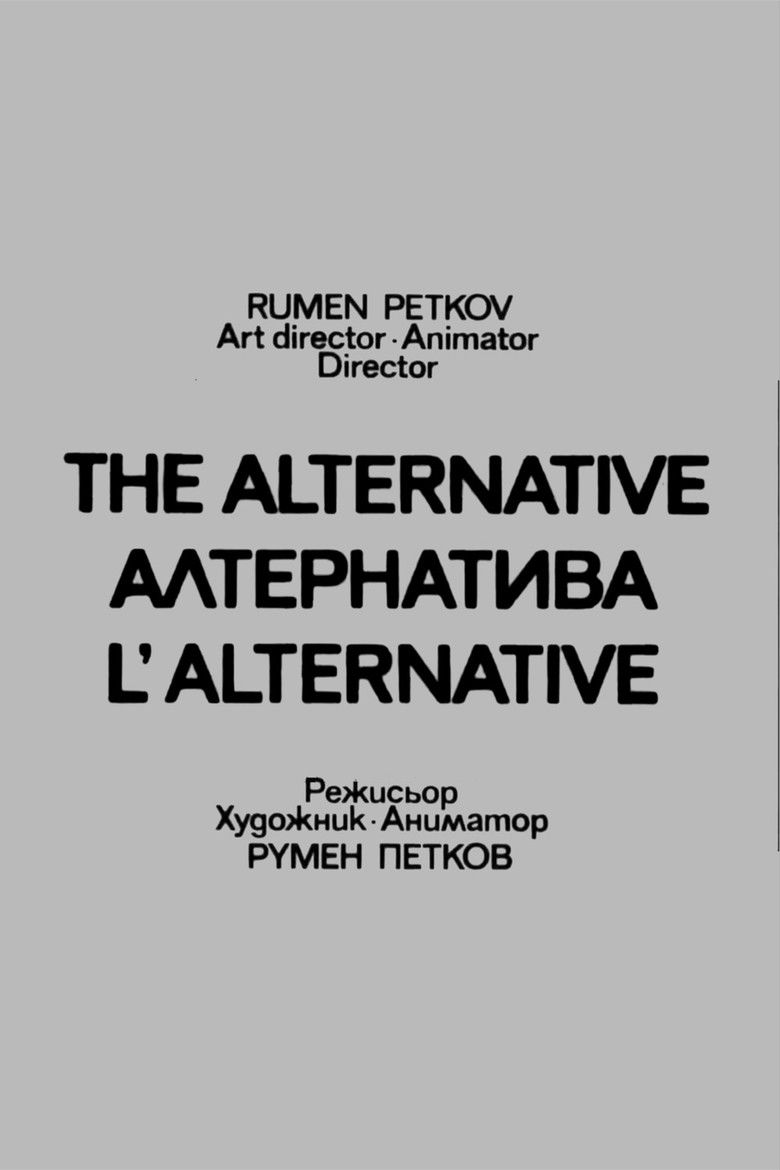
Alternative (1978) arrives with the coordinates of a animation film situated in 1970s cinema. The record credits Rumen Petkov with the direction and places its documented performers in the foreground. With an unusually compact form, the useful question is not to invent an invisible intention, but to notice how these documented choices shape audience expectations before the first frame.
Read as animation, the film carries the pressure of the journey. Survival supplies the visible urgency; the deeper stake lies in the values, ties, or memories that cannot all be saved at once. The most precise critical test is therefore what movement undoes rather than merely which destination is reached. A quick verdict always simplifies the object it claims to summarize. It is more useful to follow visible choices, their consequences, and the tension they create between familiarity and singularity.
The twist begins after danger: staying alive is not yet the same as knowing which life to rebuild. Instead of asking whether the film confirms the expected story of survival, the sharper question is whether it changes the person, place, or institution with the power to define it. The final question becomes less ‘should this be liked?’ than ‘which choice truly organizes the experience?’
THE VERDICT, REFRAMED
Our angle: a singular voice often emerges from tension between familiar elements. Here, survival changes meaning under the pressure of the journey.
THE DOCUMENTARY STARTING POINT